Playful expression within a few taps
Home Page
🤬
Chat History
🤬
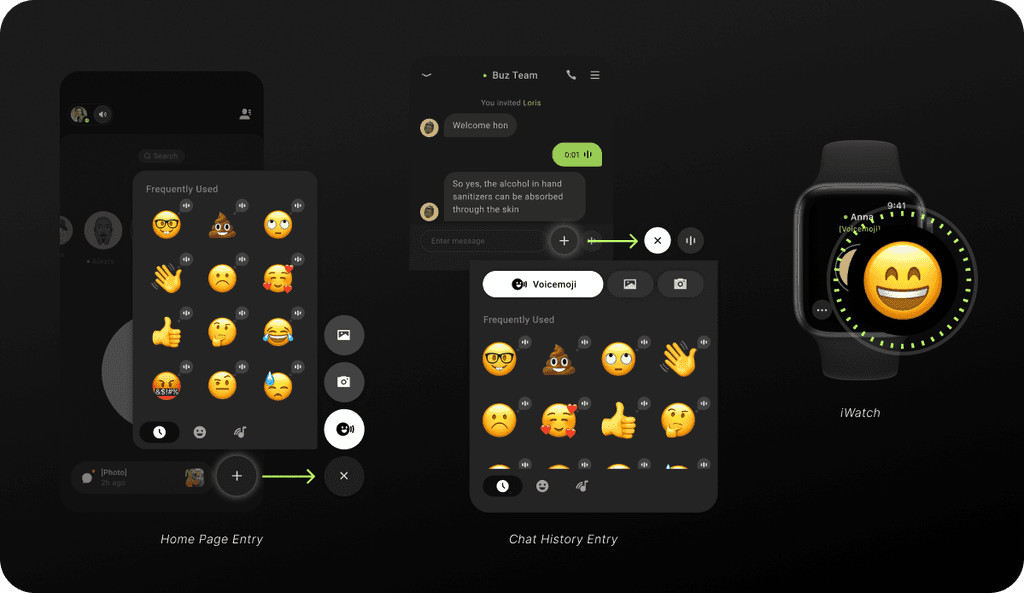
Effortless access of Voicemoji in every chat scenario
Preview animation effects & audio for a Voicemoji
Preview Voicemoji
🙄
Preview
😆
Lively conversations right on wrist
32
Voicemojis are sent per active user daily
12%
of active users send Voicemoji daily
Increase in overall user engagement 🎉
Metrics:
Increasing number of messages sent per user (both VE and non-VE messages)
Increase in new user retention rate (2nd/3rd/7th)
Feature Prioritization
Before designing Voicemoji, I organized and facilitated the internal Idea Discovery Workshop for the design team. For the feature prioritization, we recognized that the Voicemoji feature had the potential to have high impact while requiring low effort. This prioritized Voicemoji as a key feature to develop.
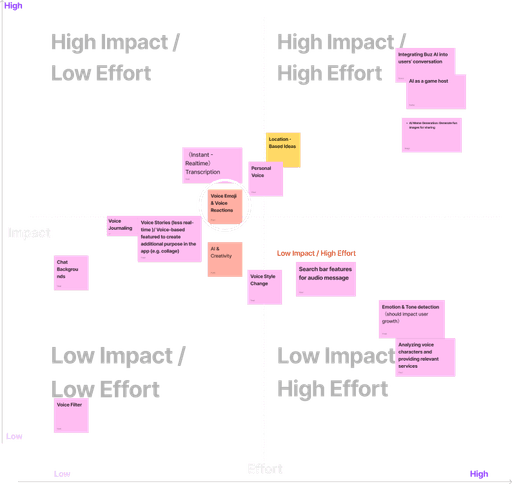
Feature Prioritization
Problem Space
Our high-level business goals were to have:
better user engagement & higher user retention rate.
Specifically, compared to other messaging apps, Buz lacked entertaining elements in its conversation experiences, such as sticker features, quick reactions, and other interactive tools that foster engagement.
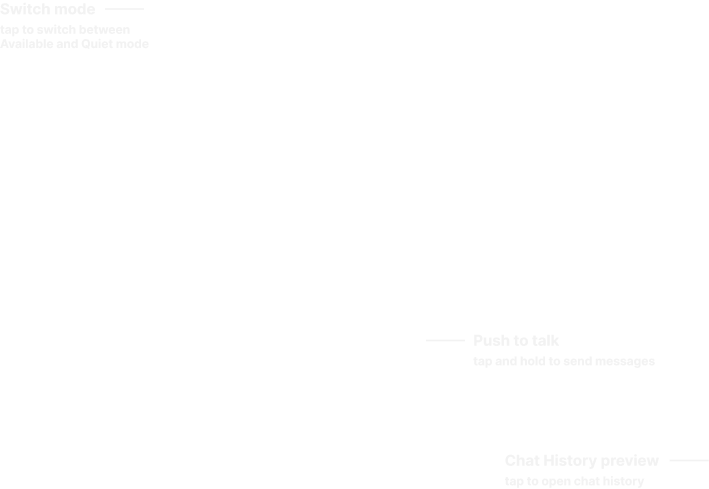


What Buz look like before
ux benchmarking
I analyzed sticker features on various apps and summarized the following design patterns in current market:
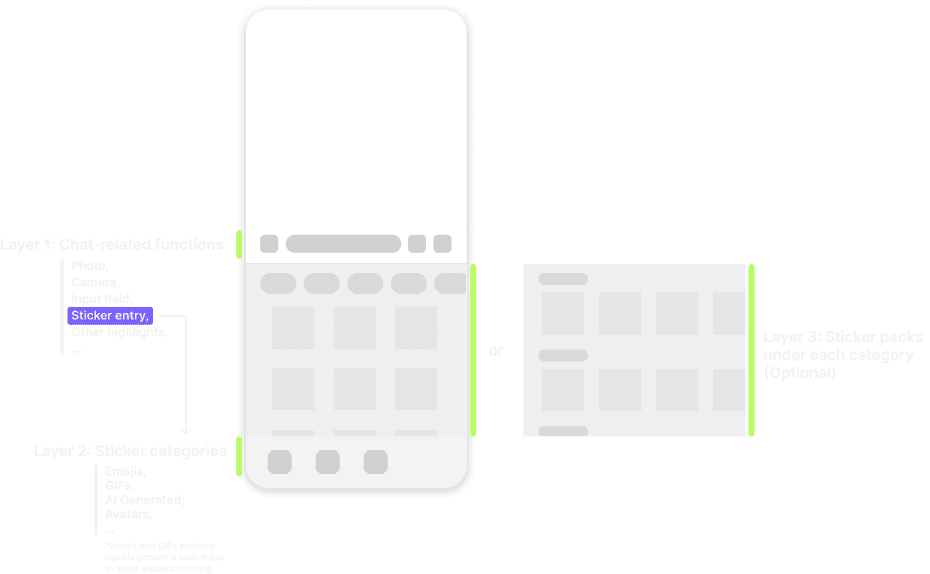
Based on above structure, I built the potential options for information architecture with PM:
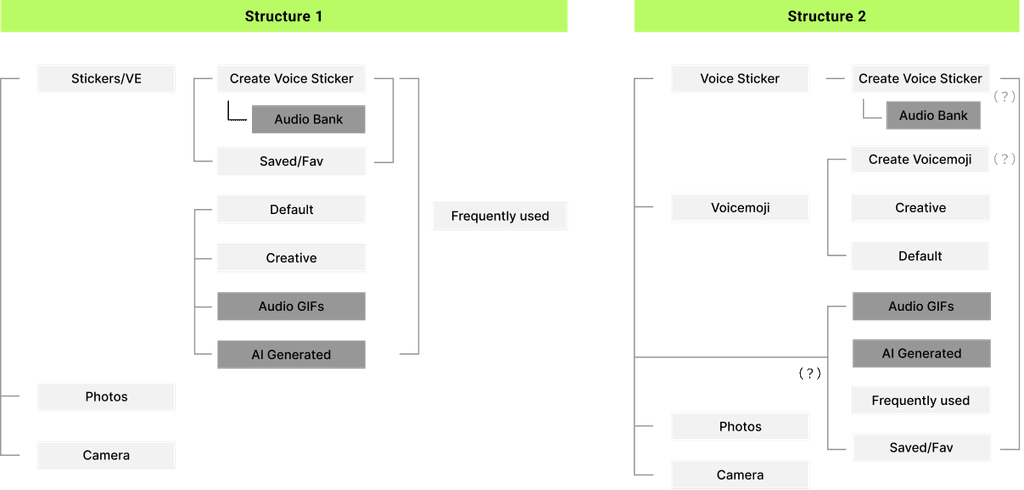
Design Goals
Based on findings, our design goals were to:

Encourage users to express themselves in conversations in a fun and engaging way

Simplify sticker selection process to minimize user effort

Ensure sound selections align with Buz's brand identity
Early concept
As I started to explore early concepts, I established the framework for potential flows within Voicemoji feature:
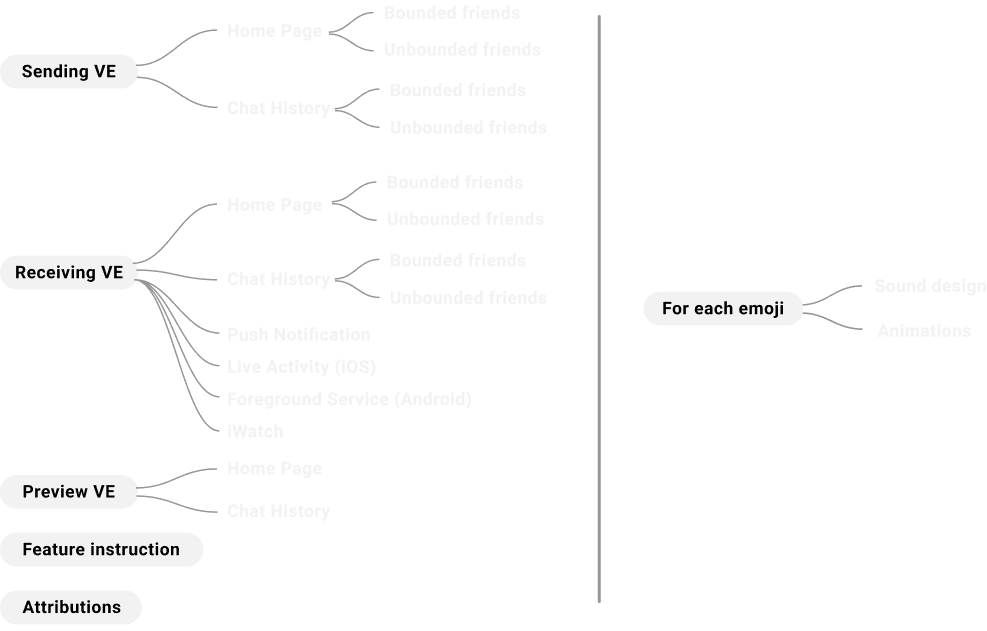
I built a few rapid prototypes for key flows based on initial feedbacks from internal teams and multiple stakeholders:
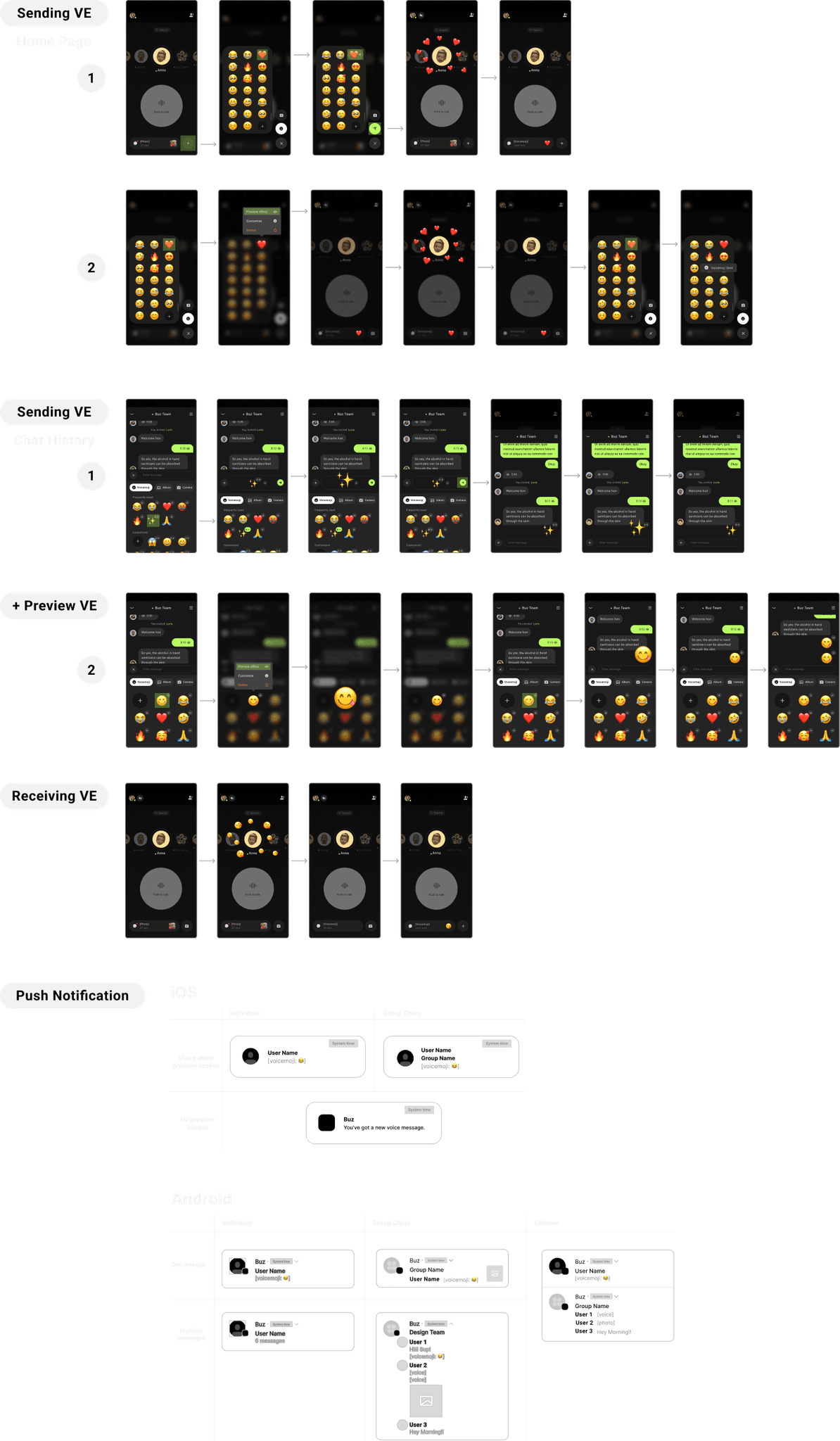
Prototype samples
USABILITY tESTING
10 task flows x 7 participants
After collecting internal feedback, the early concepts are nearly finalized. Then, I created interactive hi-fi prototypes for 10 different task flows, including sending and receiving Voicemojis in different circumstances.
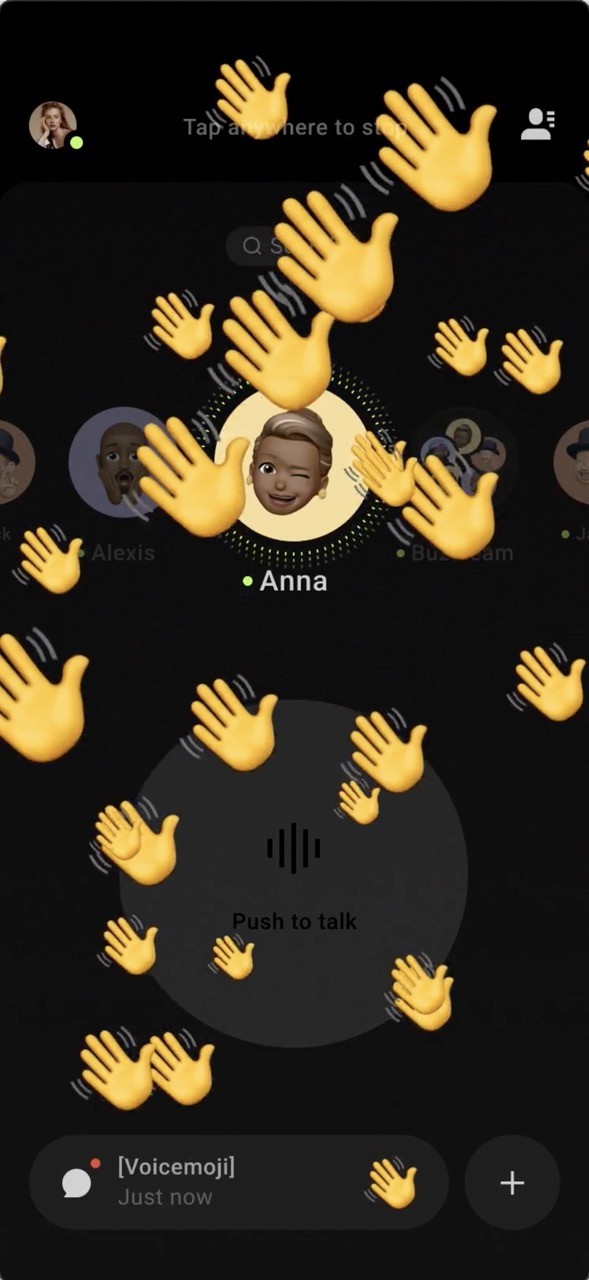
Task 3 - Receiving VE from home page
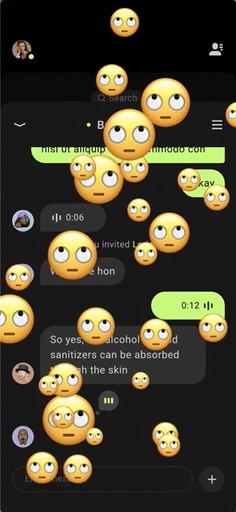
Task 5 - Receiving and replay VE
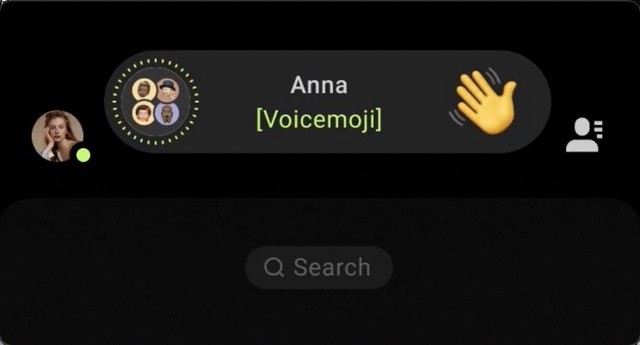
Task 4 - Receiving from unbound friends
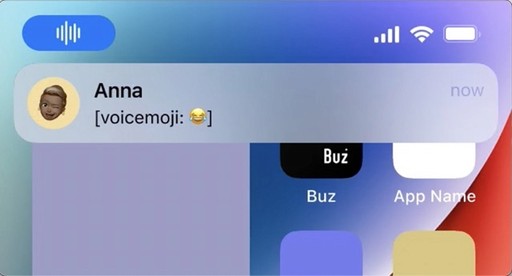
Task 8 - Receiving VE notification
Research goals:
To evaluate overall experience of the feature, especially learning curve for first-time users
To identify any usability issues, including navigation issues, and user preferences
To explore how well Voicemoji integrates with existing features
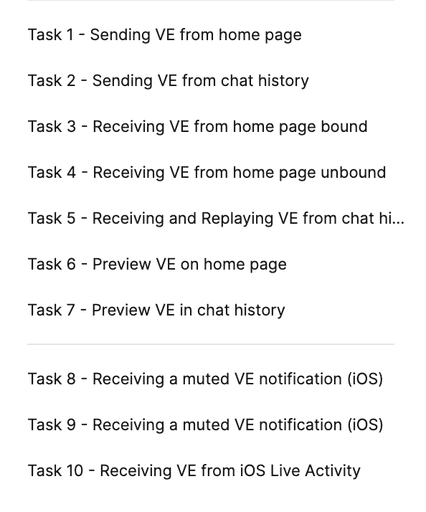
Findings:
Generally participants found it intuitive and easy to navigate.
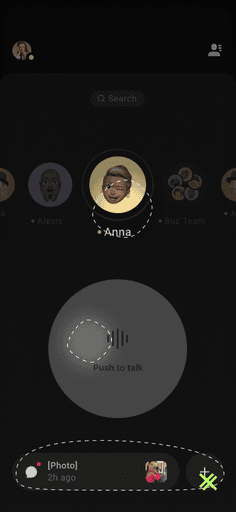
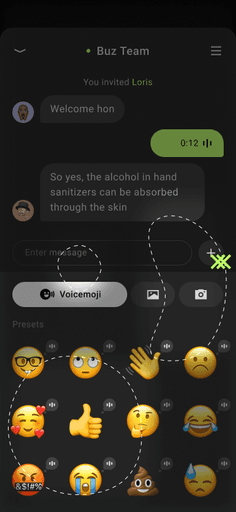
Participants' eye tracking
Spamming interaction needed: Participants desire to send certain Voicemoji (drum) more rapidly.
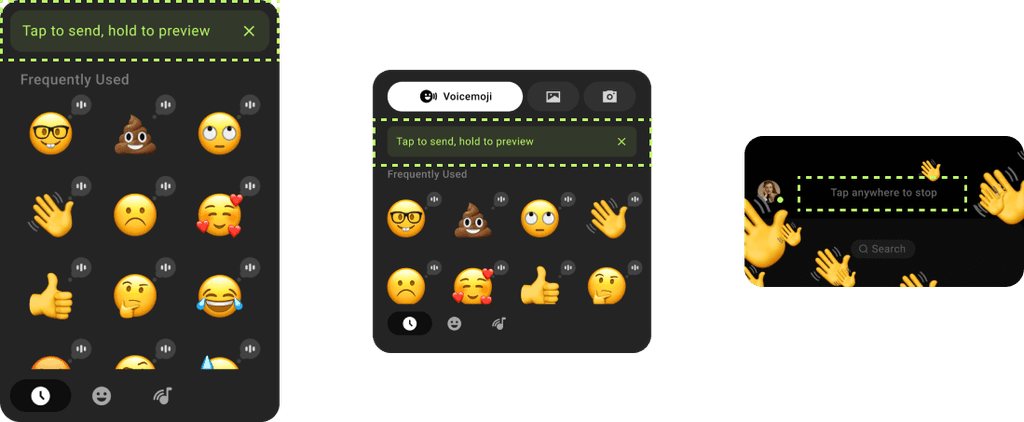
Clearer instructions needed:
previewing a VE by tapping & holding
how to stop the animation
Final polish before launch
Prioritize spamming interaction - Design rationale for sending VE in chat history

More common
Allow animation preview

Allow spamming effect
Less need for animation preview
Provide clearer instructions for preview and VE auto-play
major iterations after launch
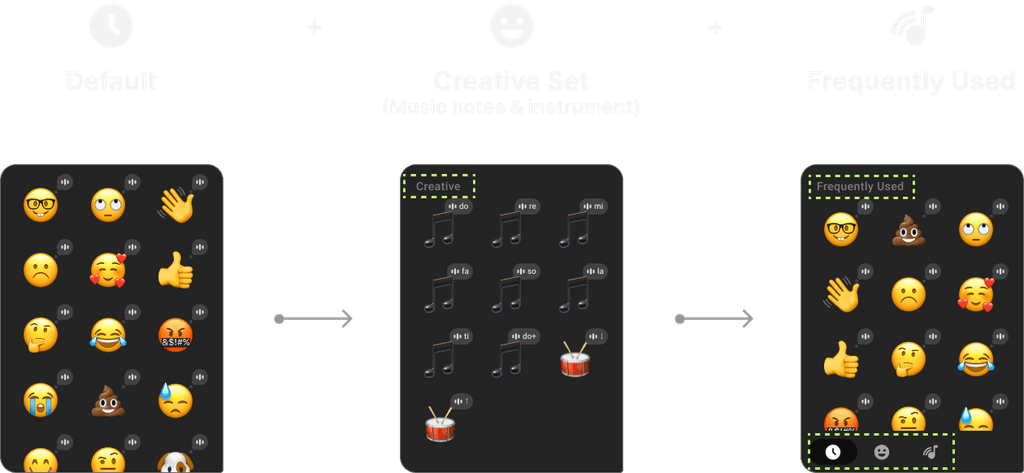
After launching the first version, we continued to make the following major changes to Voicemoji based on user feedback and data.
Increasing Categories for Voicemojis
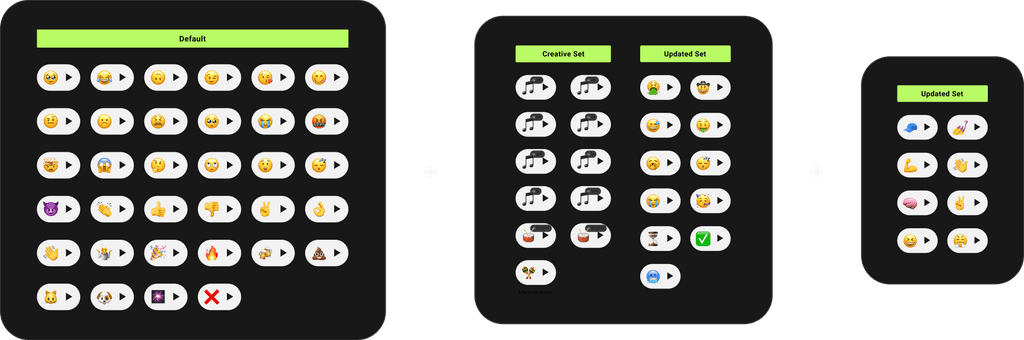
Iterating sounds to fit Buz’s brand identity
😭
😘
🤨
😭
🤮
🎵
✌
😆
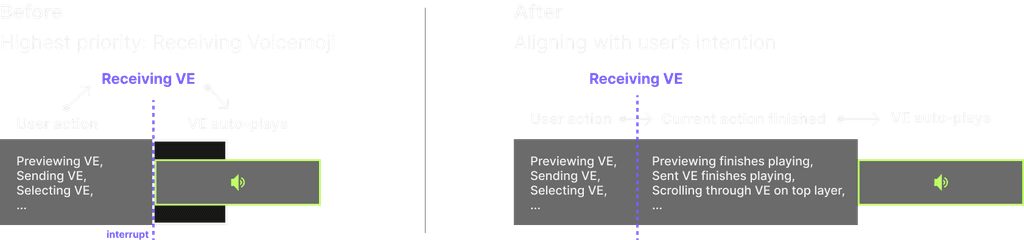
Aligning Voicemoji autoplay logic with user priority
Solution highlights
Multi-modality - Seamless integration in various touchpoints
Providing multiple access points across devices
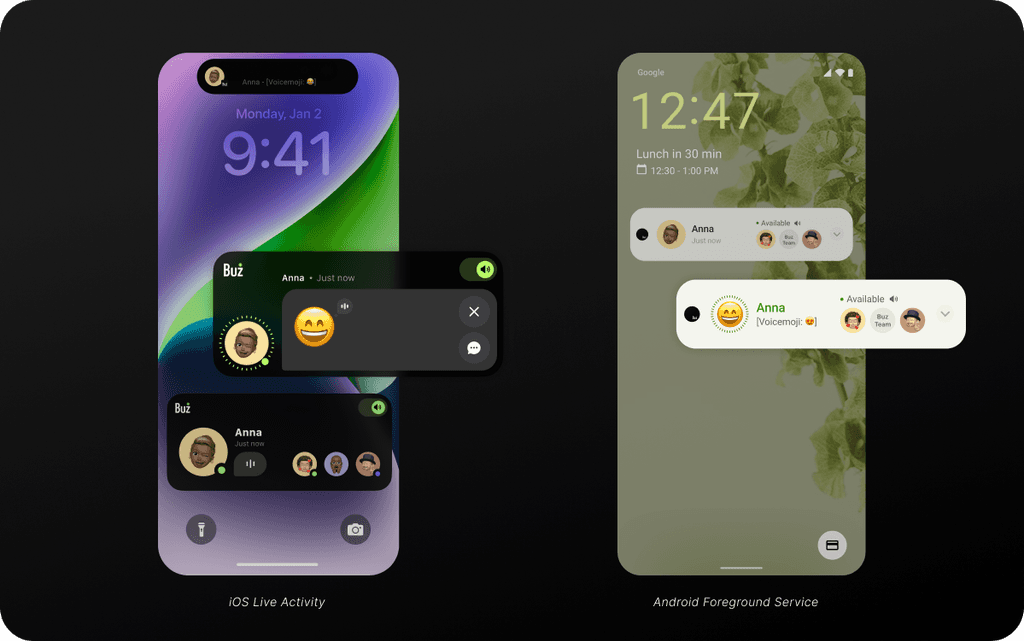
Utilizing diverse widgets across OS platforms to notify users
Other feedback
"Very fun & creative feature!"
— Malaysia user
PM highly praises this feature. 👍
The proportion of users engaging in VE spamming is higher.
Reflection
Project Takeaways:
Iterative improvement based on real user data and qualitative feedback
The post-launch phase highlighted the importance of continuous improvement. Upon launching the Voicemoji feature, we updated the feature based on user feedback and engagement metrics. The feedback loops ensured the feature remains aligned with user preferences.
Ambiguity can be an opportunity
Due to the uniqueness of Buz app, a common sticker feature may initially seem ambiguous and daunting. However, this ambiguity empowered our team to unlock new possibilities and experiment with new design patterns for this feature.
Technical feasibility is not fixed
The perceived value of certain features can justify extra technical effort. Communicating the value to dev teams can make them a reality.